
How to Build a Heavy-Duty Fleet Parts Stocking Program
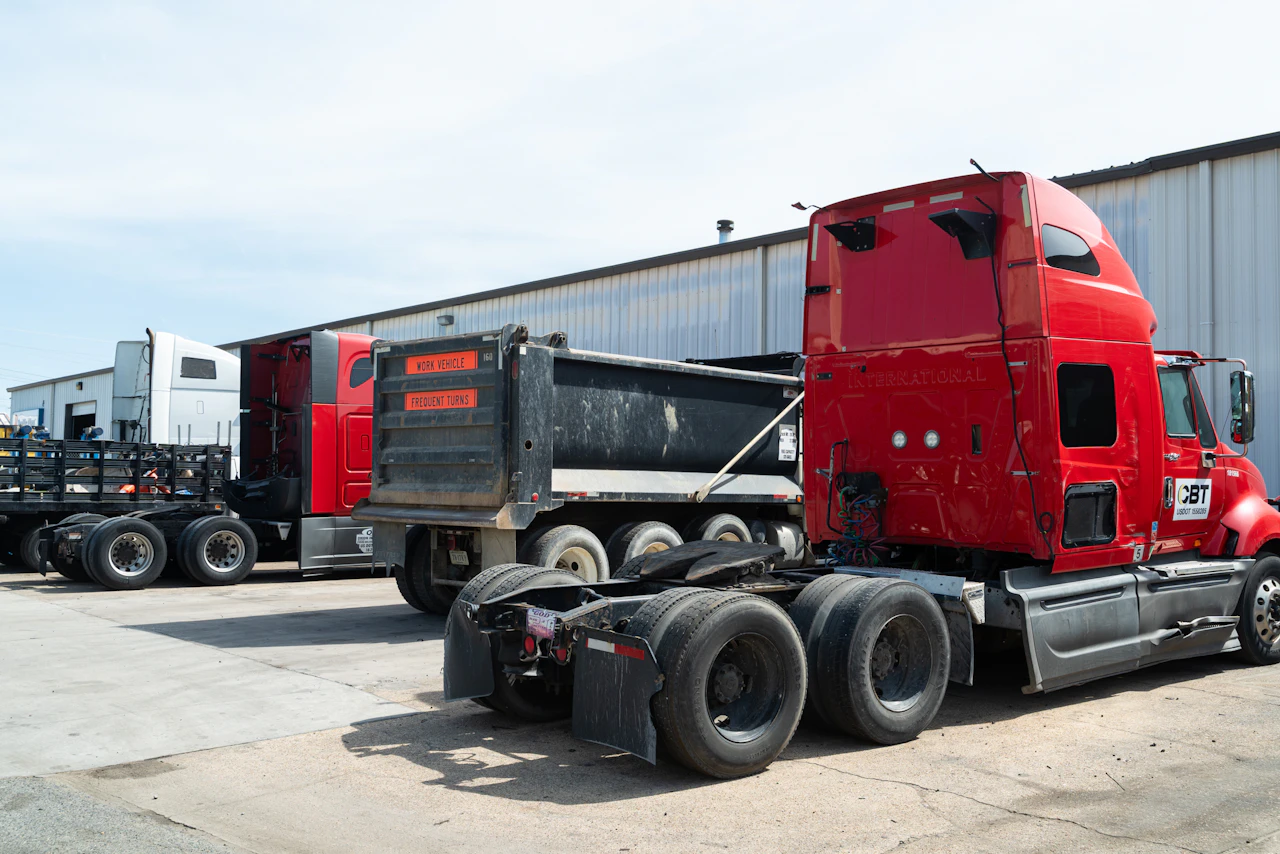
For a heavy-duty fleet, having the right part on the shelf can be the difference between a quick repair and hours—or even days—of downtime.
But a good fleet parts stocking program isn't about filling shelves with as many parts as possible. Too much inventory ties up cash and leaves you with parts you may never use. Too little inventory leaves trucks and equipment sitting while you wait for a delivery.
The goal is simple:
Stock the right parts, in the right quantities, based on what your fleet actually uses.
At Hex 6 & Company, we work with heavy-duty trucks, trailers, construction equipment, agricultural equipment, and commercial fleets throughout East Texas. One thing we see repeatedly is that downtime isn't always caused by a difficult repair.
Sometimes the repair is straightforward—the fleet simply doesn't have the part.
Here's how to build a smarter fleet parts stocking program.
1. Start With Your Fleet
Before deciding what to stock, take inventory of the equipment you're maintaining.
Create a fleet list that includes:
- Year
- Make
- Model
- Engine
- Transmission
- Axle configuration
- Brake system
- Suspension
- Unit number
- VIN or serial number
- Equipment application
Then look for commonality.
If 15 trucks use the same filters, belts, brake components, or wheel-end parts, those items become much stronger stocking candidates than a component used by only one truck.
Standardization makes inventory management much easier.
2. Identify Your High-Use Maintenance Parts
Start with the parts your technicians already replace regularly.
For most heavy-duty fleets, preventive maintenance items should make up the foundation of the stocking program.
Common examples include:
Filters
- Oil filters
- Fuel filters
- Air filters
- Fuel/water separators
- Hydraulic filters
- Transmission filters
Belts and Maintenance Components
- Serpentine belts
- Accessory belts
- Tensioners
- Idlers
- Common hoses and clamps
Brake Components
- Brake shoes
- Brake pads
- Brake drums
- Rotors
- Slack adjusters
- Brake chambers
- Air fittings
- Common valves
Wheel-End Components
- Wheel seals
- Bearings
- Hub components
- Lubricants
- Gaskets and related hardware
These are predictable-use parts. If your maintenance history shows you're consistently replacing them, keeping an appropriate quantity available can significantly reduce waiting time.
3. Stock Parts Based on Downtime Risk
Frequency isn't the only factor.
Ask another question:
What happens to our operation if we don't have this part?
A relatively inexpensive part can create an expensive downtime event.
For example, a belt, hose, fitting, sensor, air-system component, or electrical component may cost far less than the revenue lost while a truck or machine sits.
Consider three factors when deciding whether to stock something:
How often does it fail?
How quickly can we normally get it?
How much does it cost us if the equipment is down?
Parts that are inexpensive, commonly needed, and capable of stopping an entire unit should receive serious consideration for your stocking program.
4. Build a Preventive Maintenance Kit for Each Equipment Group
One of the easiest ways to improve fleet maintenance is to stop sourcing every PM part individually.
Create standardized PM kits for each major group of equipment.
For example:
Unit Group A – Highway Trucks
PM kit:
- Oil filter
- Primary fuel filter
- Secondary fuel filter
- Air filter when required
- Required fluids
- Drain plug seal or related hardware
When the truck reaches its service interval, the parts are already identified.
This helps eliminate situations where the technician starts a service only to discover that one filter is missing.
PM kits also make it easier to forecast future parts requirements based on mileage, hours, or scheduled maintenance intervals.
5. Don't Forget Hydraulic Parts
For construction, agricultural, vocational, and off-highway fleets, hydraulic failures can create some of the most frustrating downtime.
A damaged hydraulic hose can shut down a machine even when the engine, drivetrain, and rest of the hydraulic system are functioning correctly.
Consider keeping commonly used:
- Hydraulic hose
- Hydraulic fittings
- Adapters
- O-rings
- Seals
- Caps and plugs
- Hydraulic filters
- Quick-connect fittings
Your inventory should reflect the hose sizes, fitting styles, and equipment actually used in your fleet.
If your operation regularly experiences hydraulic hose failures, developing a hose and fitting strategy can dramatically reduce downtime.
6. Establish Minimum and Maximum Stock Levels
Every stocked part should have a minimum and maximum quantity.
For example:
Wheel Seal ABC
- Minimum: 2
- Maximum: 6
When inventory reaches two, the part is reordered.
This creates a simple replenishment system and prevents employees from discovering an empty shelf only after a truck is already in the shop.
Your minimum should account for:
- Average usage
- Supplier lead time
- Fleet size
- Failure frequency
- Criticality of the component
Your maximum helps prevent unnecessary inventory investment.
7. Separate Critical Parts From Convenience Parts
Not every part deserves the same stocking priority.
A useful system is to classify inventory into three groups.
A – Critical Parts
Parts that are frequently needed or could create significant downtime if unavailable.
These should receive the highest stocking priority.
B – Regular Maintenance Parts
Frequently consumed items that support scheduled repairs and preventive maintenance.
These should be replenished consistently based on usage.
C – Special-Order Parts
Expensive, uncommon, or unit-specific components that can normally be sourced when needed.
These generally shouldn't consume large amounts of shelf space or inventory dollars.
This approach helps put your money into the inventory most likely to keep equipment moving.
8. Use Repair History to Determine What Belongs on the Shelf
Your repair history is one of the most valuable inventory-planning tools available.
Review the previous 6–12 months and identify:
- Most frequently replaced parts
- Repeated failures
- Most common PM components
- Emergency parts purchases
- Parts that repeatedly caused repair delays
- Components technicians frequently leave the shop to purchase
- Parts that are consistently overnighted
Pay particular attention to expedited freight.
If you're repeatedly paying overnight shipping for the same $50 or $100 part, there's a good chance that item belongs on your shelf.
9. Track Inventory Usage
Once the program is established, every part removed from inventory should be recorded.
Otherwise, your inventory system will eventually say you have three when the shelf has zero.
Each part should ideally be tied to:
- Unit number
- Repair order
- Technician
- Quantity used
- Date
- Current quantity on hand
This creates accountability while generating the data needed to improve future stocking decisions.
10. Review Slow-Moving Inventory
A stocking program shouldn't be permanent.
Fleet composition changes.
Equipment gets sold. Specifications change. New trucks are purchased. Maintenance practices evolve.
Review inventory periodically and identify parts that haven't moved.
Ask:
- Does this still fit equipment in our fleet?
- When was it last used?
- Why are we stocking it?
- Can it be returned?
- Should the maximum quantity be reduced?
- Has the equipment using it been sold?
A good parts room isn't necessarily a full parts room.
It's a productive parts room.
11. Work With a Heavy-Duty Parts Supplier Who Understands Your Fleet
Your supplier should do more than take a part number and process an order.
A good fleet parts partner should help you:
- Identify parts correctly
- Cross-reference components
- Find alternative options when appropriate
- Build PM kits
- Analyze common-use inventory
- Establish stocking quantities
- Source difficult-to-find parts
- Reduce emergency purchasing
- Identify parts and service opportunities before failures occur
The better your supplier understands your fleet, the easier it becomes to anticipate what you'll need.
The Goal Isn't More Inventory. It's Less Downtime.
A successful fleet stocking program doesn't require keeping every possible repair part on the shelf.
It requires identifying the small percentage of parts responsible for a large percentage of your regular maintenance and downtime.
Start with your fleet.
Review what you're actually using.
Identify your downtime-critical components.
Set minimum and maximum quantities.
Track usage.
Then adjust the program as your fleet changes.
The best part to have isn't necessarily the most expensive one. It's the part your technician needs when a truck or machine is sitting in the bay.
Let Hex 6 Help Build Your Fleet Parts Program
At Hex 6 & Company, we can work with your team to evaluate your trucks and equipment and help develop a parts stocking strategy around your actual operation.
Whether you need help with preventive maintenance parts, heavy-duty truck and trailer components, filters, belts, brakes, wheel ends, hydraulic hoses, fittings, adapters, or equipment parts, our goal is to help you have access to the parts you need—before downtime starts costing you money.
Hex 6 & Company
Honest. Dependable. Quality.
Heavy-Duty Parts • Diesel Service • Equipment Repair • Hydraulics • Mobile Service
Learn more at: hex6andcompany.com
📞 903-343-9527
✉️ inquiry@hex6andcompany.com📍 5406 FM 850, Tyler, TX
Contact HEX 6
Hex 6 serves Tyler, TX and the surrounding East Texas area from our 36-bay shop and a fleet of mobile service trucks - available for scheduled maintenance, emergency roadside assistance, and on-site repairs for trucks, trailers, and equipment. Can't bring it to us? We'll come to you.


